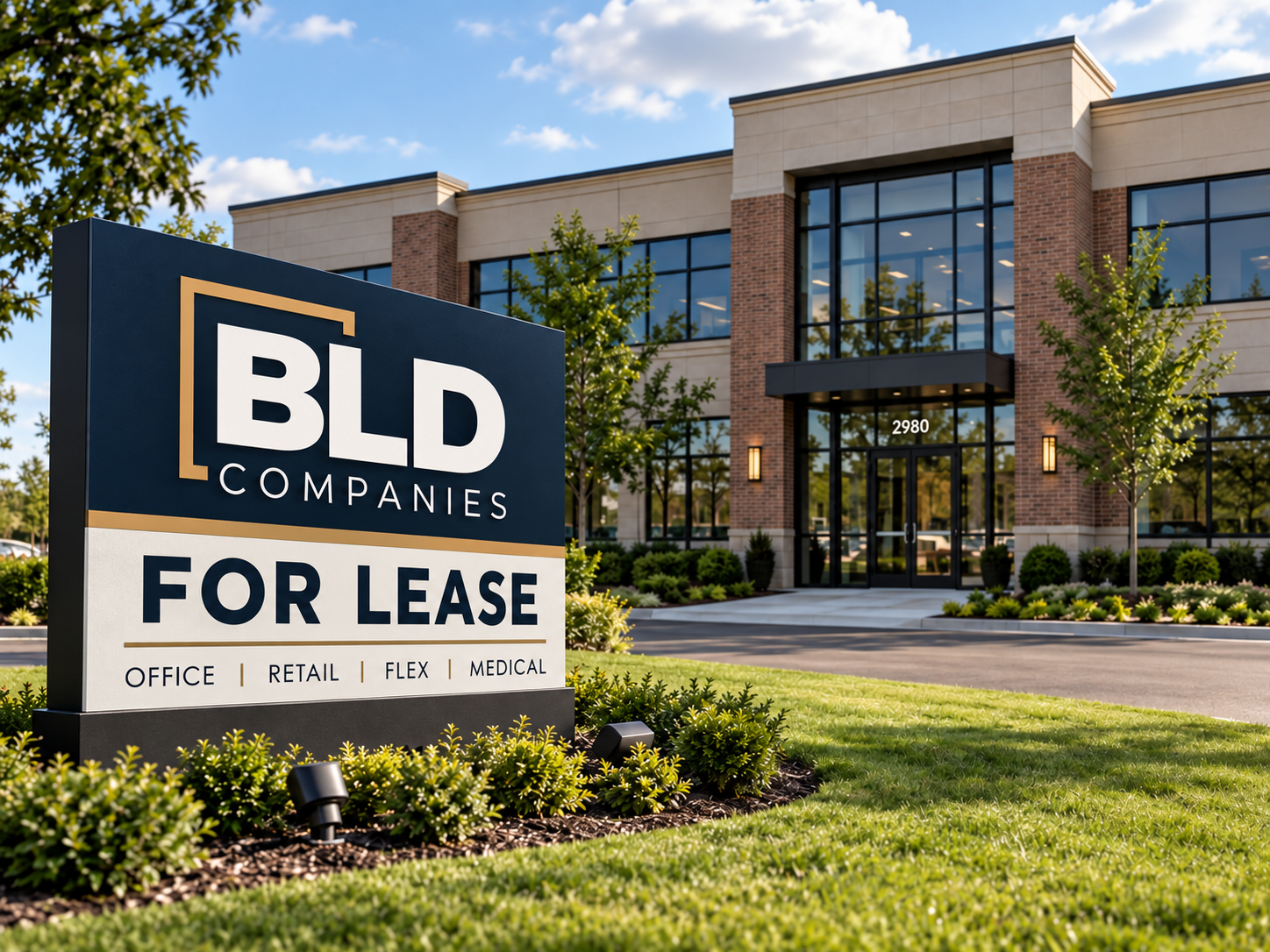
A commercial property can be well located, functional, competitively priced and completely suitable for the right tenant or buyer—and still sit on the market longer than expected.
The reason is often simple: being listed is not the same as being marketed.
Putting a property on the MLS, LoopNet, Crexi or another listing platform is an important step, but it is only one part of an effective commercial real estate strategy. A listing makes a property available. Marketing gives people a reason to pay attention to it.
At BLD Companies, effective property marketing starts with understanding the audience and presenting the property around the opportunity.
A Listing Describes the Property. Marketing Explains the Opportunity.
Most commercial listings begin with the same basic information: square footage, asking rent or sale price, property type, parking, access, zoning, available suites and building features.
Those details are necessary, but they rarely answer the most important question a prospective tenant or buyer is asking:
Why should this property matter to me?
A strong commercial marketing strategy helps a prospect understand not only what the property is, but why the property may fit a specific business, investor or owner-user.
A 3,000-square-foot office suite can be described as simply that—or it can be positioned as an opportunity for a law firm, medical user, accounting office, nonprofit organization or growing professional-services company.
A vacant retail building can be marketed as empty space—or as a highly visible location with redevelopment or repositioning potential.
The physical property has not changed. The presentation has.
The Right Audience Matters
One of the most common mistakes in commercial property marketing is trying to appeal to everyone. A property usually performs better when the marketing is built around the users most likely to value it.
That means asking questions such as:
- What types of businesses would work well in this space?
- What problems does the property solve for a tenant or buyer?
- Which features are most important to that audience?
- Is the property better suited to an owner-user, investor or tenant?
- Does the surrounding market support a particular use?
- Are there features that may be ordinary in one context but highly valuable in another?
For example, a separate entrance may not sound especially important in a standard property description. For a medical office, therapy practice, attorney or business that sees clients throughout the day, it may be a meaningful advantage.
A large open area may appear unfinished to one prospect and ideal for a showroom, studio, collaborative office or flexible workplace to another.
Good marketing connects those features to the people who are most likely to care about them.
Photos Should Tell the Story
Commercial real estate photography is often treated as documentation rather than marketing. There is an important difference.
A collection of dark, poorly framed photos may technically show the building, but it does little to help a potential tenant or buyer understand the space.
Strong property photography should help someone quickly understand:
- The exterior and street presence.
- Building access and main entrances.
- Lobby or reception areas.
- Office layouts and open work areas.
- Conference rooms and kitchens or break rooms.
- Parking.
- Unique architectural features.
- The overall condition and character of the property.
The goal is not to make a property appear to be something it is not. The goal is to present the property clearly and professionally enough that the right prospect can recognize the opportunity.
The Property Description Should Do More Than List Features
Commercial property descriptions often become a collection of facts: “2,500 square feet. Five offices. Conference room. Kitchen. Ample parking.”
That information is useful, but it does not create much context.
A stronger description might explain that the suite offers a practical layout for a professional office user, with multiple private offices, a conference room, kitchen and convenient parking for employees and clients.
The information is largely the same. The second version helps the reader understand how the property could actually be used.
Commercial marketing should make it easier for a prospect to imagine operating their business in the space.
Different Platforms Require Different Marketing
A property should not necessarily be presented the same way everywhere. A LoopNet listing, MLS entry, LinkedIn post, company website page and Facebook Marketplace advertisement all reach different audiences and serve different purposes.
Commercial Listing Platforms
Platforms such as LoopNet and Crexi are often used by brokers, investors and commercial tenants actively searching for space. These listings should provide strong property details, professional images, accurate specifications and clear positioning.
MLS
Depending on the property and local market, MLS exposure may reach residential agents, commercial agents, investors and owner-users. The description should quickly explain the opportunity and important property characteristics.
LinkedIn allows commercial property marketing to reach business owners, professionals, investors and people who may not currently be searching property databases. That makes it especially useful for telling the story behind a property.
Social Media
Social platforms can generate additional visibility, particularly for smaller office spaces, retail opportunities and owner-user properties. The messaging usually needs to be more direct, visual and easy to understand.
Property-Specific Web Pages
A dedicated page on a brokerage or property website can provide more information than most third-party listing platforms allow. It can include additional photography, floor plans, building history, location information, leasing opportunities and links to related properties.
Using several channels together helps increase the number of ways a prospect can discover the property.
Marketing Should Continue After the Listing Goes Live
Another common mistake is treating the listing launch as the end of the marketing process. It should be the beginning.
Once a property is exposed to the market, the response can provide useful information:
- Are people viewing the listing but not scheduling tours?
- Are tours happening without proposals?
- Are prospects consistently asking the same questions?
- Are certain features generating more interest than expected?
- Is the property attracting the wrong type of user?
Market feedback can help determine whether the issue is pricing, presentation, positioning, condition or something else.
Commercial property marketing should evolve based on what the market is telling you.
Sometimes the Property Itself Needs Attention
Marketing cannot solve every problem. A property may be well marketed and still struggle because the physical space needs improvement.
That may include dated finishes, poor lighting, worn flooring, exterior maintenance, landscaping, signage, common areas, restrooms, outdated layouts, deferred maintenance or unfinished construction.
In those situations, the question becomes whether strategic improvements could meaningfully change how the property competes.
This is where property marketing and property strategy begin to overlap.
Sometimes a modest investment in paint, flooring, lighting or exterior presentation can have a larger impact than simply increasing advertising. Other properties may require a more substantial repositioning strategy.
Pricing Is Part of Marketing
A well-designed campaign cannot overcome pricing that is significantly disconnected from the market.
Prospective tenants and buyers have access to more information than ever before. They can compare available properties, lease rates, asking prices and features quickly.
If a property is priced above comparable alternatives, the marketing needs to clearly demonstrate why. If there is no compelling reason for the premium, the market will usually respond accordingly.
Pricing, positioning and presentation need to work together.
Commercial Real Estate Is Often a Positioning Problem
Two similar buildings can perform very differently.
One may be described simply as available commercial space. The other may be positioned around a specific opportunity:
- Professional office suites near major highways.
- Flexible medical or therapy space.
- Downtown retail with strong pedestrian visibility.
- Historic office space with architectural character.
- Owner-user opportunity with additional rental income.
- Vacant building with redevelopment potential.
That positioning helps prospects understand where the property fits.
The goal is not to exaggerate what the property is. It is to identify what makes the property relevant.
Marketing Should Support the Property's Larger Strategy
Commercial properties are rarely static. Buildings change. Tenants change. Markets change.
A property that worked well for one use twenty years ago may need a different strategy today.
That is why property marketing should be connected to broader questions about the asset:
- Who is the ideal tenant?
- Who is the likely buyer?
- Should the property be renovated?
- Should the layout be changed?
- Would dividing the space create more demand?
- Could a different use improve performance?
- Does the building need repositioning before being marketed more aggressively?
Sometimes the best marketing decision is not another advertisement. It is changing the property.
Good properties can still be overlooked.
Effective marketing starts with understanding the audience and presenting the property around that opportunity. Exposure matters—but positioning is what helps the right prospect recognize the fit.
The Bottom Line
Listing a commercial property is important, but it is only the starting point.
Effective commercial real estate marketing requires a clear understanding of the property, the market and the people most likely to see value in the opportunity.
At BLD Companies, we approach commercial real estate from both the brokerage and property sides of the equation. That allows us to look beyond simply placing a property on the market and consider how positioning, presentation, condition and strategy can work together.
If you have a commercial property that has been sitting vacant, attracting limited interest or may need a different approach, BLD Companies can help evaluate the property and determine the next step.