A renovation can make a commercial building more attractive without necessarily increasing its value by the same amount. The right improvements solve a market problem, support durable income, or reduce risks that buyers and tenants care about.
Define what “increase value” means
Commercial real estate value is often influenced by income, expenses, risk, comparables and the property’s potential use. Improvements can contribute by supporting higher achievable rent, reducing vacancy or operating costs, improving tenant retention or removing barriers to a sale.
An owner considering improvements should distinguish market value from personal preference. A costly finish that does not improve achievable income or market demand may have limited financial return.
1. Fix problems that threaten occupancy and financing
Active roof leaks, unreliable heating and cooling, water infiltration, electrical hazards and deteriorated common areas can create serious leasing or transaction objections. Addressing critical deficiencies may protect existing value more than flashy upgrades create new value.
Prioritize life safety, code compliance and essential building systems with licensed specialists and appropriate permits. An inspection and capital plan help separate urgent work from improvements that can be phased.
2. Improve layout and tenant usability
A flexible floor plan, well-located entrances, efficient circulation, appropriate restrooms and a practical mix of private and open work areas can make a building suitable for more prospective users.
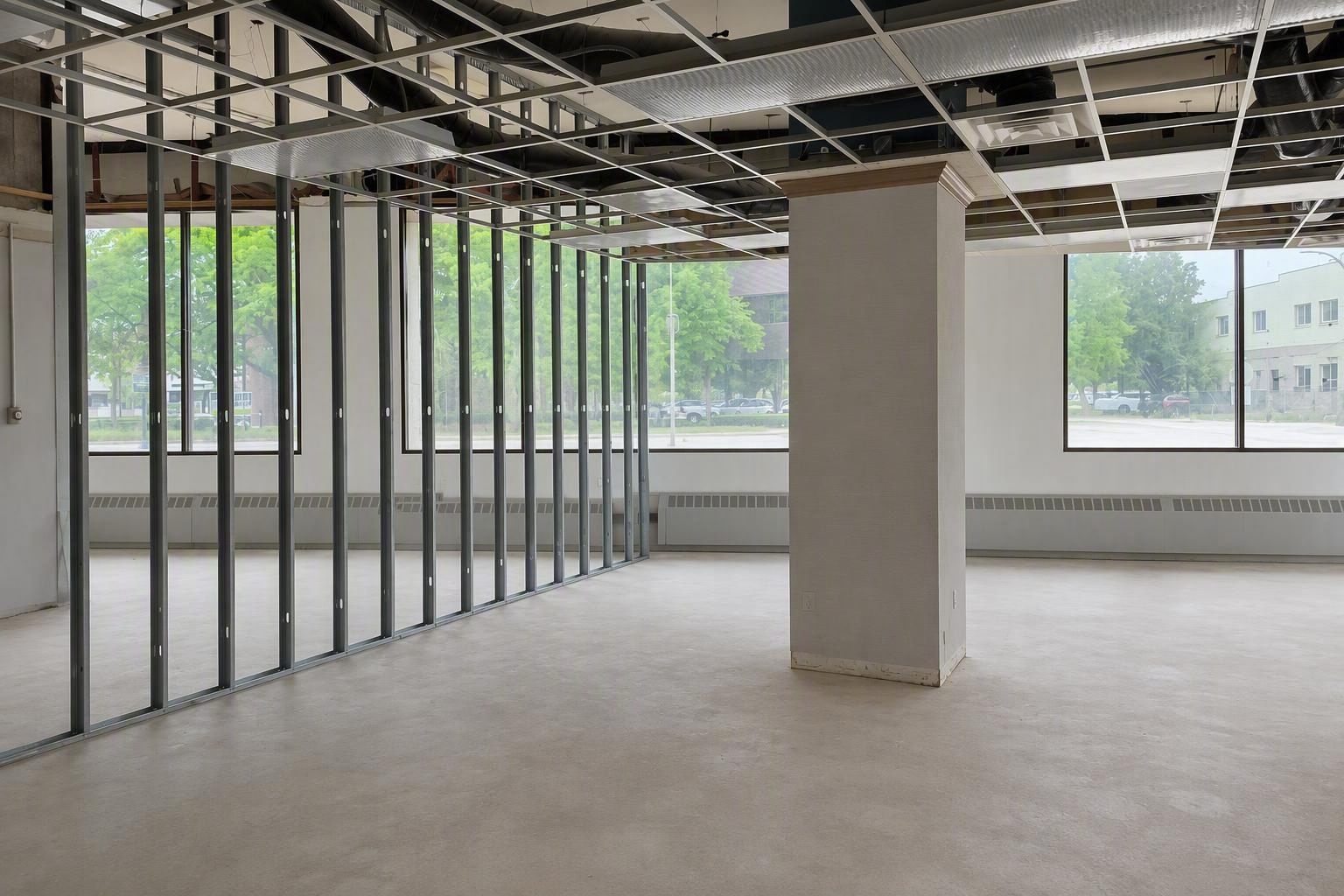
However, permanent interior build-outs made without an identified tenant can waste capital. Compare a basic clean delivery condition with subdividing or a full speculative build-out, and confirm feasibility with designers and local authorities.
3. Evaluate energy and operating-cost improvements
Lighting, controls, HVAC upgrades and envelope repairs may lower operating costs and improve tenant experience. Savings depend on building usage, utility rates, maintenance, installation cost and lease structure.
Where the landlord pays utilities under a gross lease, verified savings may directly improve net operating income. Where tenants pay, lower occupancy costs can still improve competitiveness and retention.
4. Strengthen first impressions without overspending
Lighting, signage, landscaping, paving repairs, clean entryways, updated common areas and accurate exterior presentation are often easier for prospective tenants to notice than expensive hidden upgrades.
Focus on changes that remove specific objections or reflect the expectations of the target user. Compare vendor bids and consider whether cosmetic work will remain relevant across multiple tenants.
5. Address access, parking and compliance barriers
Poor wayfinding, damaged walkways, inadequate parking layout or access limitations can shrink the qualified tenant pool. Before spending on conversion or expansion, verify zoning, permitted use, accessibility requirements and building approvals.
Costs and feasibility vary by building and jurisdiction. Do not assume an existing use is automatically permitted for a new tenant.
6. Test the improvement with simple economics
For illustration only: if an improvement produces $12,000 per year in sustainable additional net operating income and the market supports a 7% capitalization rate, the income-based value indication could rise by about $171,000 ($12,000 ÷ 0.07). This is not an appraisal and is not a predicted result.
Compare that hypothetical increase with all-in project costs, lost rent during construction, financing, permitting, contingencies and the reliability of the projected income. Cap rates vary by property and market, and some improvements will not produce enough incremental income to justify their cost.
7. Sequence work around the actual leasing strategy
Start with the likely tenant profile, competitive positioning and known objections. Then rank work as essential repairs, low-cost marketability upgrades, targeted improvements and tenant-specific build-out.
If the plan depends on a tenant-specific requirements, a negotiated tenant improvement allowance or landlord work letter may provide more flexibility than fully building out an empty suite.
Coordinate brokerage and construction early
Brokerage feedback can clarify what tenants are asking for; construction planning establishes scope, cost and timing. Bringing these views together before committing capital helps avoid improving the wrong things.
BLD Companies combines commercial brokerage and construction management to help owners evaluate improvements as part of a broader property strategy.
Discuss your commercial property
Every property's condition, lease economics and market position are different. BLD can help evaluate realistic options based on the building and the owner's goals.